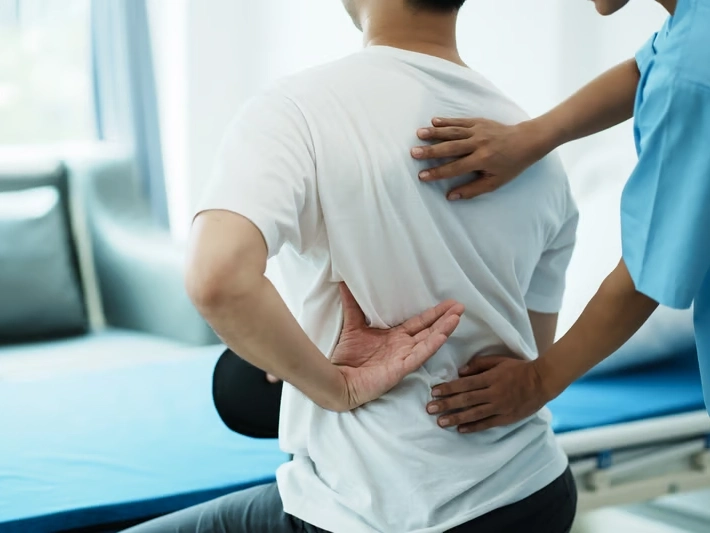
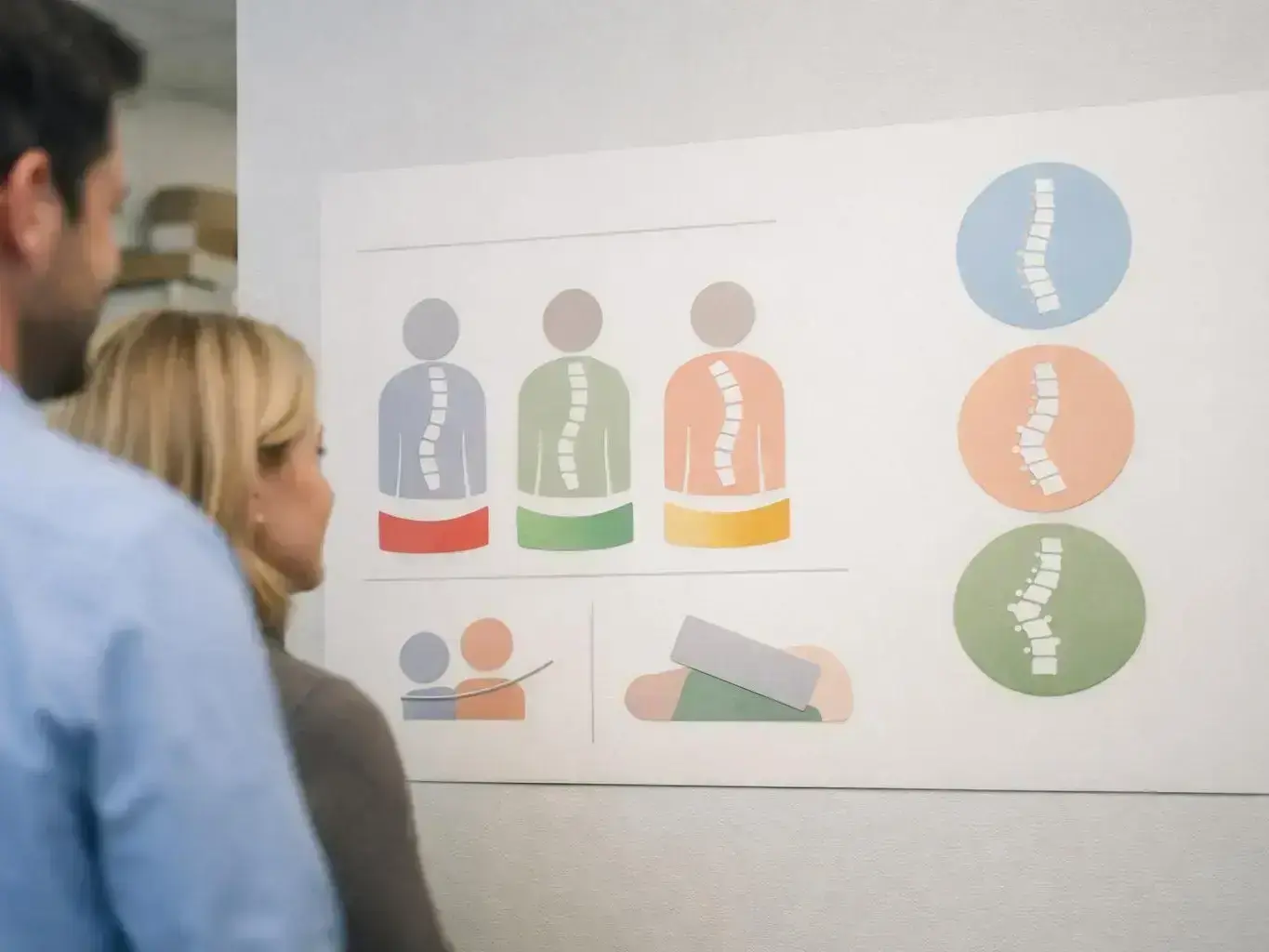
Compression Fracture is compression fractures are small cracks or breaks in the vertebrae, the bones that make up the spine. These fractures occur when too much pressure is placed on a vertebra, causing it to collapse or compress. They're most common in the middle or lower back and often result from osteoporosis, trauma. Or repetitive stress.
Category
Spinal injury
Used for
Diagnosing and treating collapsed vertebrae
Common confusion
Often mistaken for general back pain or muscle strain
Also called
vertebral compression fracture, spinal compression fracture
Often discussed with
Back Pain Treatment, Work Injury Treatment

A compression fracture is a break in a spine bone. These bones are called vertebrae.
Related glossary terms: Herniated Disc, Spinal Stenosis, Chiropractic Care.
They stack up to hold your body. They also protect your spinal cord.
When a vertebra collapses, it hurts. It can limit how you move.
It may also press on nerves. Compression fractures are different.
The bone gets squeezed. It does not break into pieces.
These fractures often happen in the middle back. That's the thoracic spine.
They can also happen in the lower back. That's the lumbar spine.
Osteoporosis (bone weakness) is a common cause. Weak bones break more easily.
Simple actions can cause them. Bending, lifting. Or coughing may do it.
Falls or car crashes can also break vertebrae. This happens even in strong bones.
The front of a vertebra collapses. The back stays whole.
This makes a wedge shape. It can change how your spine lines up.
Osteoporosis is the top cause. Bones get thin and weak.
Even small stress can break them. That's the big difference.
Falls or car crashes can also cause them. This is true for strong bones too.
Some things raise your risk. Heavy lifting is one.
Sudden impacts can too. So can some illnesses.
Cancer or long-term steroids weaken bones. Aging does too.
Bones get less dense over time. Women face higher risk.
This is especially true after menopause. Hormones change bone strength.
Compression fractures can hurt a lot. They make moving hard.
The pain is sharp. It gets worse when you move.
Standing, walking. Or sitting may hurt. Over time, posture can change.
A hunched back can form. Doctors call this kyphosis (bent spine).
It can make breathing hard. It can also affect digestion.
If a nerve is pressed, you may feel numb. You might also feel tingling.
Your arms or legs may feel weak.
Early help is key. It stops worse problems.
Without care, pain can last. You may move less.
Life may get harder. Treatment eases pain.
It helps steady your spine. It also fixes the root cause.
That's often osteoporosis. Some need surgery.
Surgery supports the spine. It helps it line up right.
These fractures worry people with weak bones. Falls can break bones.
Even small falls can do it. Prevention is very important.
One fracture raises risk for more. Keep bones healthy.
Athletes and workers lift a lot. Twisting can also hurt.
They should know the risks. Weak bones make it worse.
In Nashville, TN, chiropractors see these fractures. Car crashes cause some.
Falls cause others. Early check-ups help.
A doctor can plan the best care. Rest or therapy may help.
Some need more treatment. Watch for sudden back pain.
Also watch for posture changes. These are warning signs.
Catch them early. That stops long-term problems.
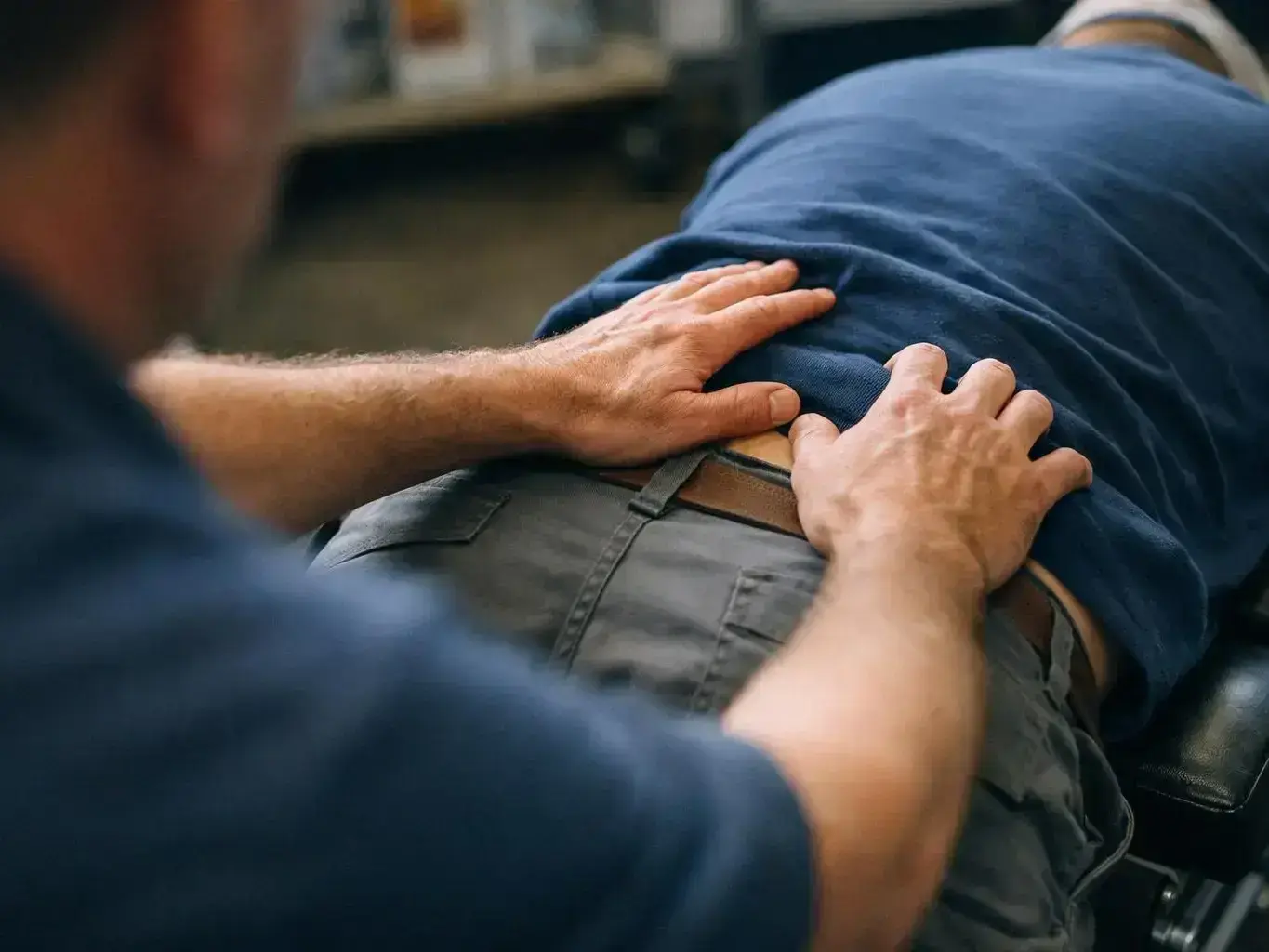
A herniated disc involves a problem with the cushion between vertebrae. While a compression fracture is a break in the vertebra itself.
Osteoporosis is a condition that weakens bones, often leading to compression fractures. But it is not a fracture itself.
Spinal stenosis is a narrowing of the spinal canal. While a compression fracture is a collapse of a vertebra.
Compression fractures can be silent at first, especially in people with osteoporosis. Regular bone density screenings and awareness of risk factors can help catch these fractures early before they cause significant pain or complications.
A 65-year-old woman with osteoporosis bends over to pick up a grocery bag and feels a sharp pain in her lower back. Over the next few days, the pain worsens. And she notices she is shorter than she used to be. An X-ray reveals a compression fracture in one of her vertebrae.
Herniated Disc is a spinal condition where the soft inner gel of a spinal disc leaks through a tear in the disc’s tough outer layer. This leakage can press on nearby nerves, causing pain, numbness. Or weakness in the back, neck, arms. Or legs. Herniated discs often result from aging, injury.
Spinal Stenosis is a narrowing of the spaces within the spine, which can put pressure on the nerves that travel through it. This condition most commonly occurs in the lower back and neck and often results from aging, wear-and-tear changes. Or arthritis. Spinal Stenosis can cause pain, numbness, muscle weakness.
Chiropractic Care is a health care profession focused on diagnosing and treating musculoskeletal disorders, primarily those related to the spine, without surgery or prescription drugs. Chiropractic Care uses hands-on spinal manipulation and other alternative treatments to align the body’s musculoskeletal structure, particularly the spine, to enable the body to heal itself. This approach aims to relieve pain, improve function. And support the body’s natural ability to recover from injuries or conditions affecting bones, joints, muscles. And nerves.
Diagnostic Imaging is a set of medical techniques that create detailed pictures of the inside of the body to help doctors and chiropractors find injuries, diseases. Or other problems. These images show bones, muscles, nerves. And organs without surgery, allowing healthcare providers to plan safe and accurate treatments for pain or movement issues.
Advanced Injury Care Clinic
Contact Advanced Injury Care Clinic for practical guidance on Compression Fracture and related chiropractor work in Nashville.