Understanding Decompression Therapy
Decompression Therapy helps your spine. It treats problems like herniated discs (bulging spinal cushions).
Related glossary terms: Disc Herniation, Chiropractic Adjustment, Spinal Alignment.
It also helps sciatica (leg pain) and back or neck pain. It's not like old traction. Old traction pulls hard all the time.
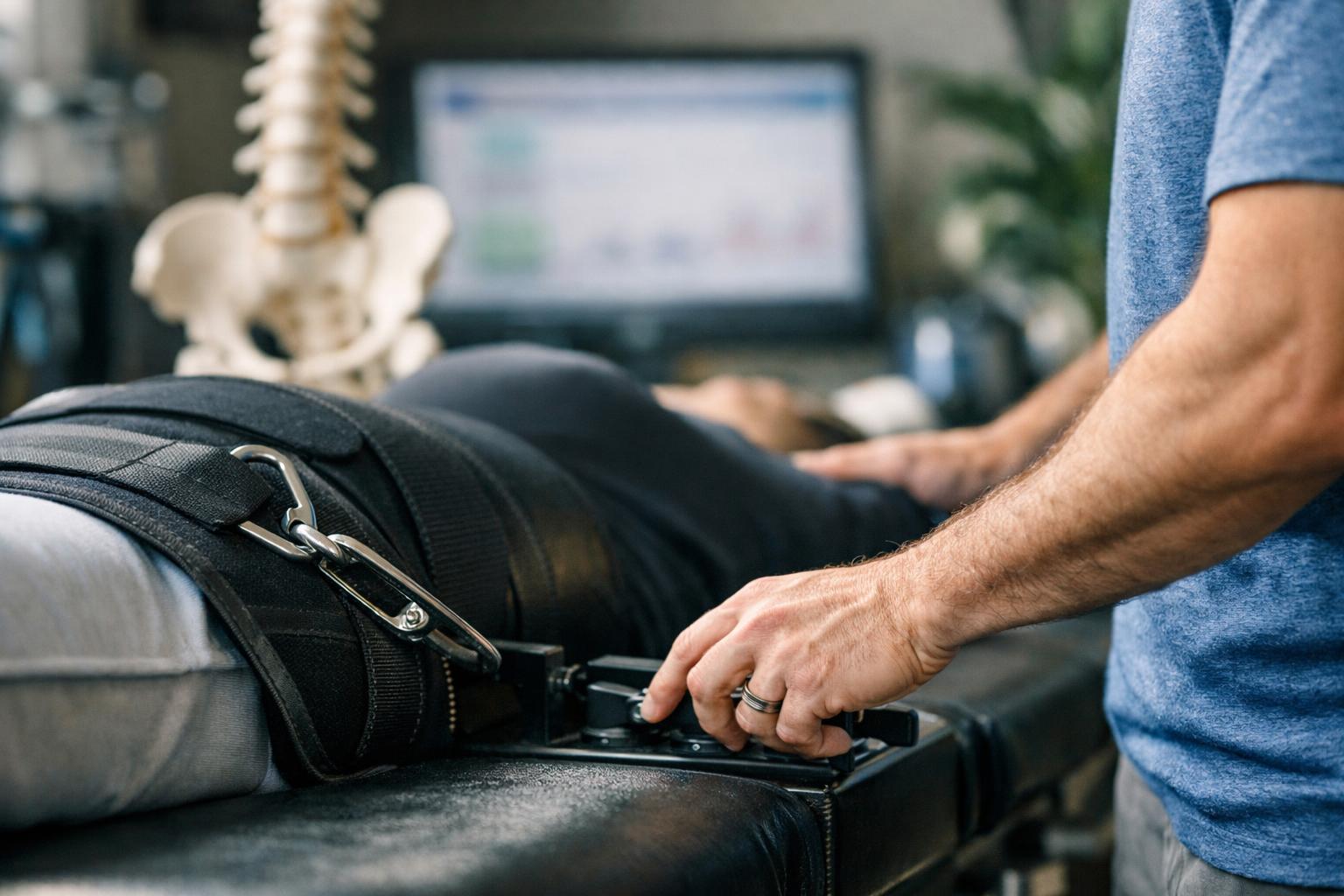
This therapy uses a table with a computer. The table pulls and releases gently. It creates a vacuum inside your spine.
This vacuum helps move bulging discs back. It pulls in oxygen, water. And food for your spine. The goal is to ease nerve pressure.
Less pressure means less pain. It also helps you move better.
This treatment doesn't need surgery. You won't get shots or take pills. It's done in a clinic, like a chiropractor's office.
It's often part of a bigger plan. That plan may include adjustments (spine fixes) or exercises. It's not a quick fix.
Many people feel better after a few sessions. It works best with other treatments.
How Decompression Therapy Works?
During a session, you lie on a special table. You may lie on your back or stomach. It depends on where you need help.
A harness goes around your hips or chest. It keeps your lower body still. The top part of the table moves.
The table pulls and lets go slowly. This creates a pumping action. It helps pull food into your discs.
It also helps pull herniated discs back. Most people feel a gentle stretch. It shouldn't hurt.
The pull strength is set just for you. It depends on your weight and pain level. Sessions last 15 to 30 minutes.
You may need 10 to 20 sessions. These happen over a few weeks. Other treatments may be used too.
These can include ice, heat. Or small shocks. They help healing. But this therapy isn't for everyone.
Pregnant women shouldn't try it. People with weak bones shouldn't either. Some spine breaks can't use it.
Why Decompression Therapy Matters?

Decompression Therapy helps without surgery. It's for people with back, neck. Or leg pain. The pain comes from spine problems.
Many people don't want surgery. It has risks and takes time to heal. It also costs a lot.
This therapy fixes the real problem. It helps discs that bulge or wear out. It does this without cutting.
It takes pressure off nerves. It helps discs get healthy. This can stop or delay surgery.
It lets people keep doing daily tasks. They can enjoy life more.
It also helps your spine move better. Bulging discs can make you stiff. They can stop you from bending.
The gentle pull helps bones move apart. This makes you more flexible. It also eases tight muscles.
The therapy helps damaged discs heal. It pulls in food and oxygen. These help discs repair.
Some people don't get help from pills. Others don't get help from exercises. This therapy can help them.
When Decompression Therapy Matters Most?
Decompression Therapy helps certain spine problems. These problems don't get better with rest or pills. They don't get better with exercises either.
It helps bulging or herniated discs. It helps worn-out discs too. It also helps sciatica (leg pain).
People with narrow spines may find help. So can people with long-term back or neck pain. The pain may shoot into arms or legs.
It's good if pain comes from pinched nerves. It's great for people who don't want surgery. It's also good if surgery isn't safe.
It helps people heal from injuries too. Car accidents can hurt spines. So can work injuries.
In Nashville, TN, chiropractors see these problems. Decompression Therapy helps them heal. It's not a cure by itself.
It works best with other treatments. Talk to a doctor first. They can make a plan just for you.