Understanding Disc Herniation
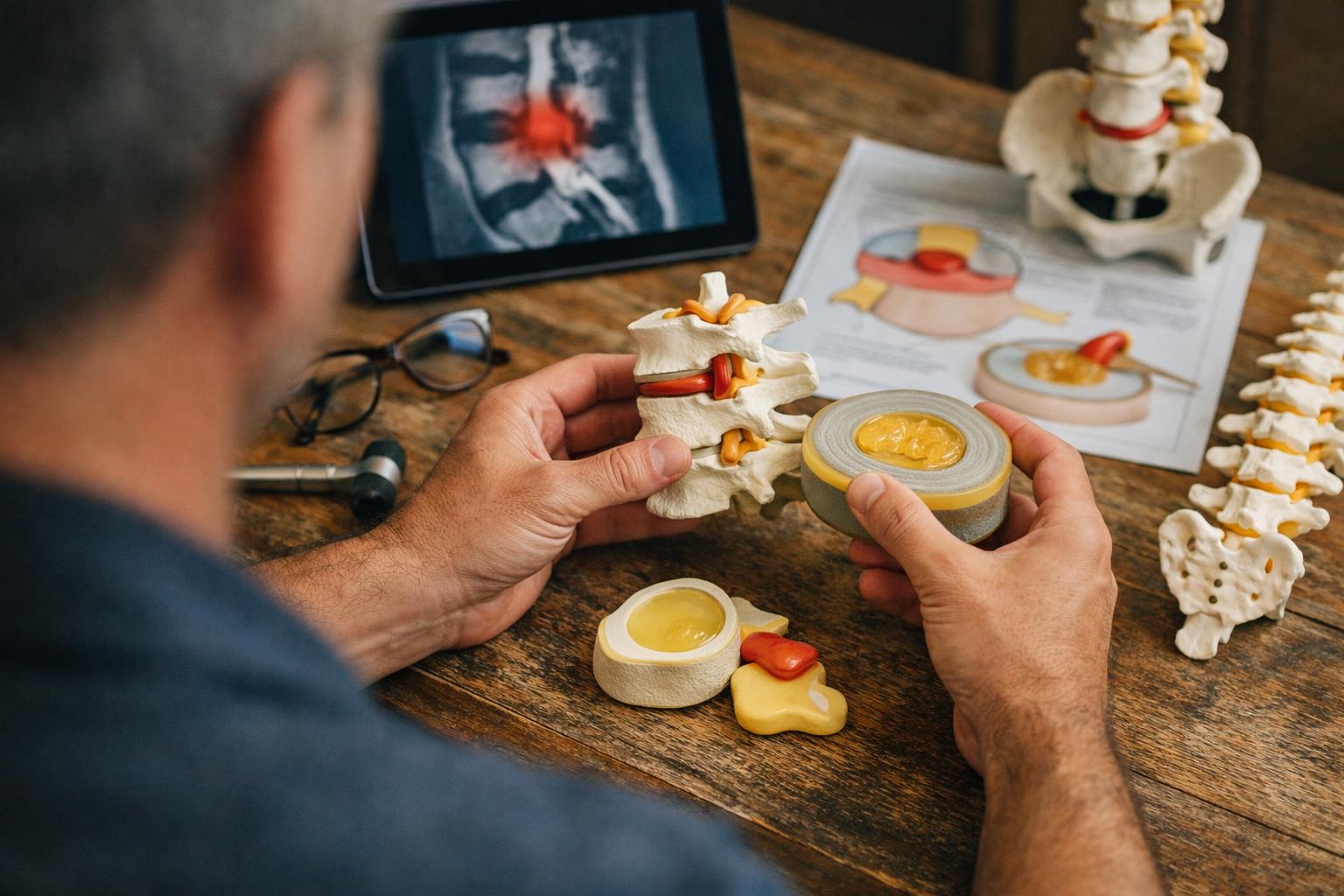
Disc herniation happens when a disc gets hurt. Discs are soft cushions between your spine bones. Each disc has a jelly center. It's called the nucleus pulposus.
Related glossary terms: Intervertebral Disc, Spinal Alignment, Lumbar Spine.
The center is wrapped in a tough outer layer. This layer is called the annulus fibrosus. If the layer tears, the jelly can push out. This makes a bulge or break.
The bulge can press on nerves. This causes pain, numbness. Or weakness. The pain is where the nerves go.
Most disc herniations happen in the lower back. This is called the lumbar spine. It holds much of your body's weight. That makes it easy to hurt.
The neck is also common. This is the cervical spine. It bends a lot. Bad posture or sudden moves can strain it.
Aging is a natural cause. Discs dry out and get stiff. Heavy lifting or twisting can also hurt them.
How Disc Herniation Works?
Your spine has 24 bones. These are called vertebrae. Discs sit between them like cushions.
When a disc herniates, it pushes out. This can press on spinal nerves. The nerves get sore or squished.
A herniated disc in the back can hurt the sciatic nerve. This causes sciatica. It's a sharp pain down your leg.
A neck disc can cause pain in shoulders, arms. Or hands. It may also cause tingling or weakness.
Doctors check for disc herniation. They do a physical exam. They may order an MRI or CT scan.
The exam tests strength and reflexes. It looks for sore spots. Scans show where the disc is hurt.
Most herniated discs get better with rest. Some need quick help. This is if you can't control your bladder or bowels.
Why Disc Herniation Matters?
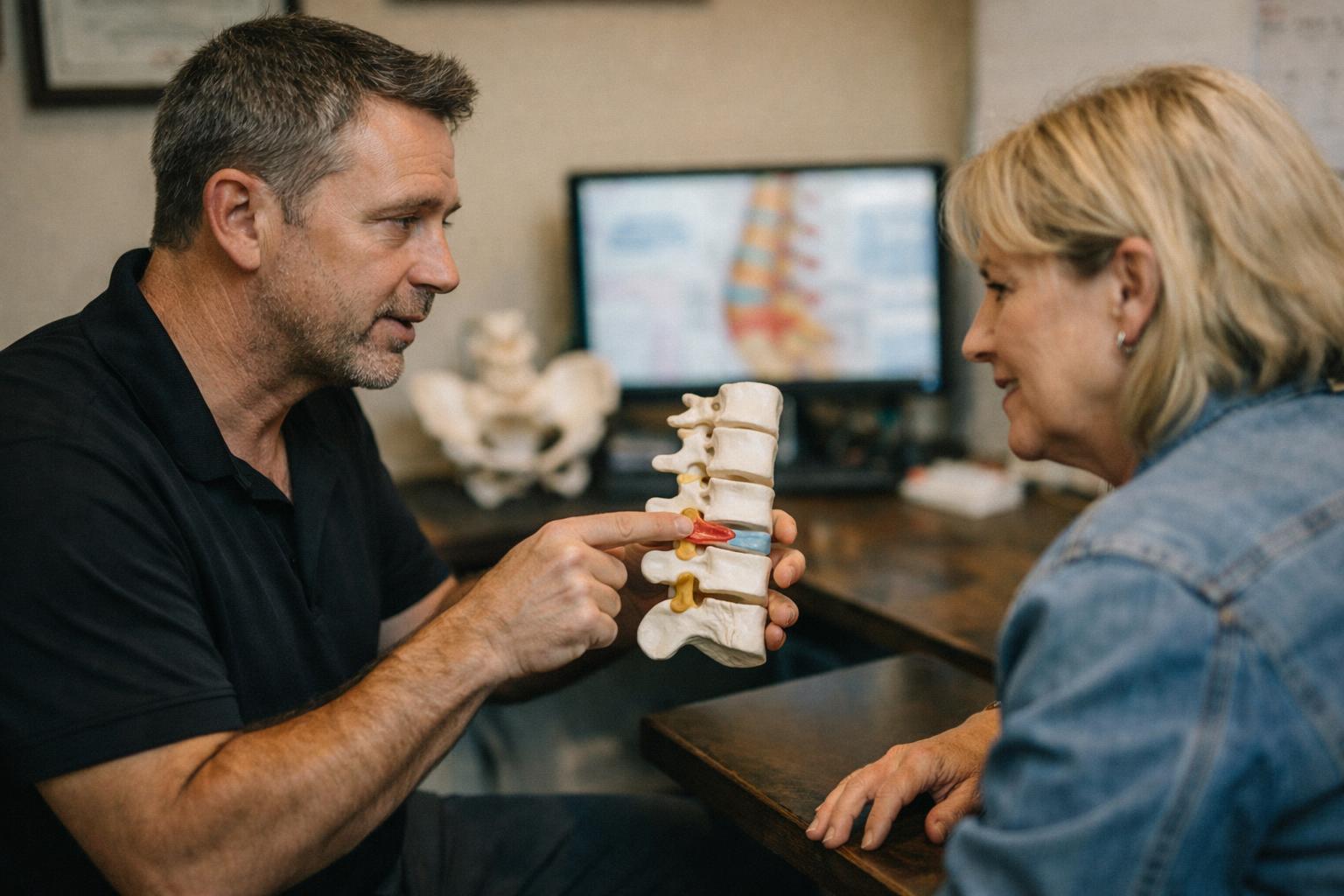
Disc herniation can hurt your daily life. It can limit how you move. It can cause long-term pain.
If not treated, nerves can get hurt for good. This can cause weak muscles. It can make you lose feeling.
Early help can reduce swelling. Rest, ice. And gentle stretches help. They take pressure off nerves.
Many people don't need surgery. Chiropractic care can help. So can physical therapy or medicine.
Knowing about disc herniation helps you stay healthy. Learn to lift heavy things right. Bend your knees. Keep your back straight.
Good posture keeps your spine healthy. Stay active. This can stop future herniations.
Surgery is rare. It's only if other treatments don't work.
When Disc Herniation Matters Most?
Disc herniation is scary with bad symptoms. Watch for sudden, strong pain. Numbness in private areas is serious.
If you can't control your bladder or bowels, get help fast. This is called cauda equina syndrome. It's an emergency.
Weak arms or legs can mean nerve damage. People with tough jobs are at risk. So are athletes.
Those with back problems should be careful. See a doctor if symptoms start.
In Nashville, TN, disc herniations are common. Many people see chiropractors or spine doctors. Active lifestyles can strain spines.
Sports, hard work. Or desk jobs can cause problems. Local doctors often suggest treatments. These include adjustments, stretches. And exercises.
Early treatment helps a lot. It can change how you feel later.