Glossary

What is Lumbar Spine?

Lumbar Spine is the lower portion of the human spine, consisting of five large vertebrae labeled L1 through L5. These bones support most of the body’s weight, enable bending and twisting. And protect the spinal cord and nerves that connect to the legs and lower organs.

Reviewed by ChiropractorNashville.linkSources reviewed: American Chiropractic Association, National Institute of Arthritis and Musculoskeletal and Skin Diseases

Quick Facts About Lumbar Spine

Category

Spinal anatomy

Used for

Weight support, movement, nerve protection

Common confusion

Often mistaken for the thoracic or sacral spine

Also called

Lower back, Lumbar vertebrae

Often discussed with

Back Pain Treatment, Work Injury Treatment

Key Takeaways About Lumbar Spine

Understanding Lumbar Spine
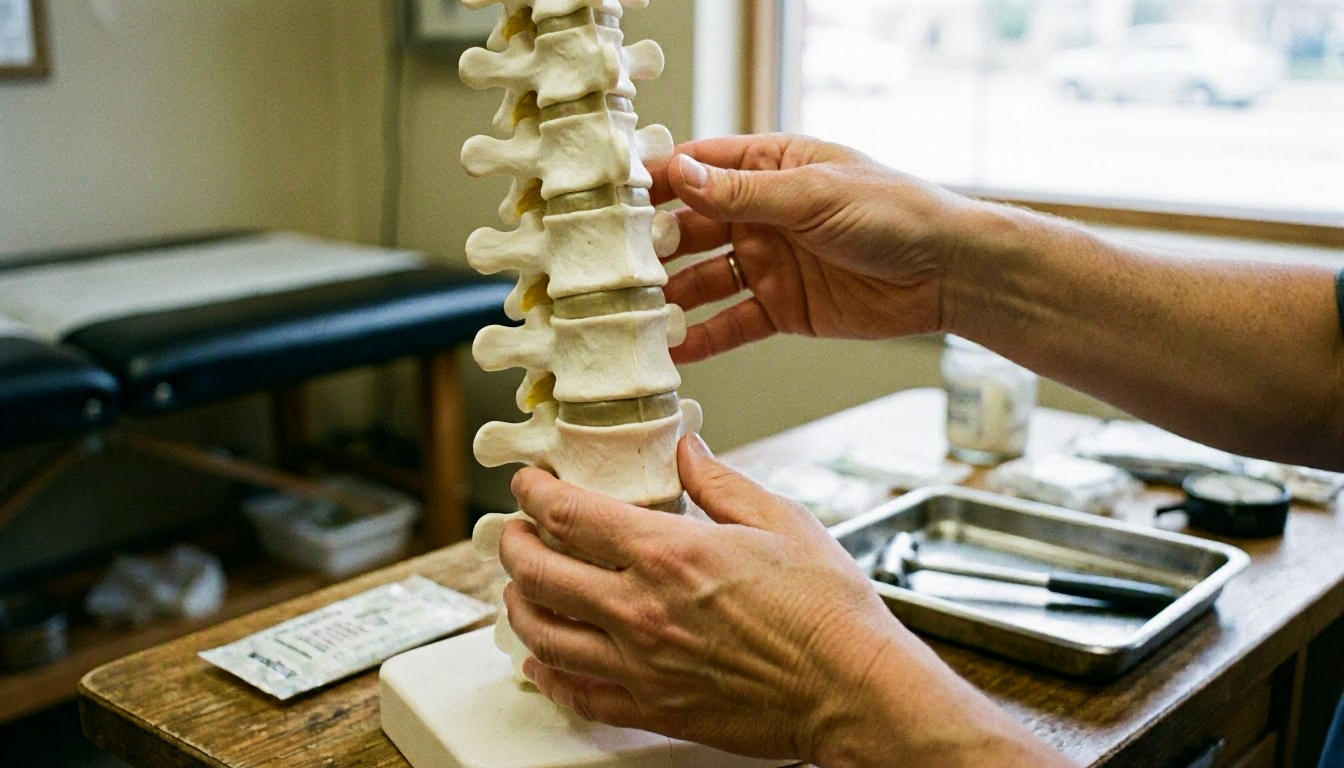
Lumbar Spine in Chiropractor: Lumbar Spine is the lower portion of the human spine, consisting of—visual guide

Your lower back has a part called the lumbar spine. It sits between your mid-back and pelvis.

Related glossary terms: Thoracic Spine, Disc Herniation, Spinal Alignment.

This part has five bones. They are called L1 through L5. These bones are bigger and stronger than others.

They hold up your upper body. They also let you bend, twist. And lean.

Each bone has a thick front. The back has bony arches. These arches protect your spinal cord.

Between each bone is a cushion. It’s called a disc (shock absorber). It keeps bones from rubbing.

Nerves from here go down your legs. They help you move and feel your hips, thighs. And feet.

How the Lumbar Spine Works?

The lumbar spine holds up your torso. It lets you move in many ways.

When you stand or lift, it spreads out the force. The discs squish a little but spring back.

Ligaments and muscles keep it steady. They help control your movements.

When you walk or run, it works with your hips. It moves force from legs to upper body.

Bad posture or weak muscles can hurt this balance. This can cause disc problems or nerve pain.

Doctors use X-rays or MRIs to check it. They do this when you have pain.

Why the Lumbar Spine Matters?
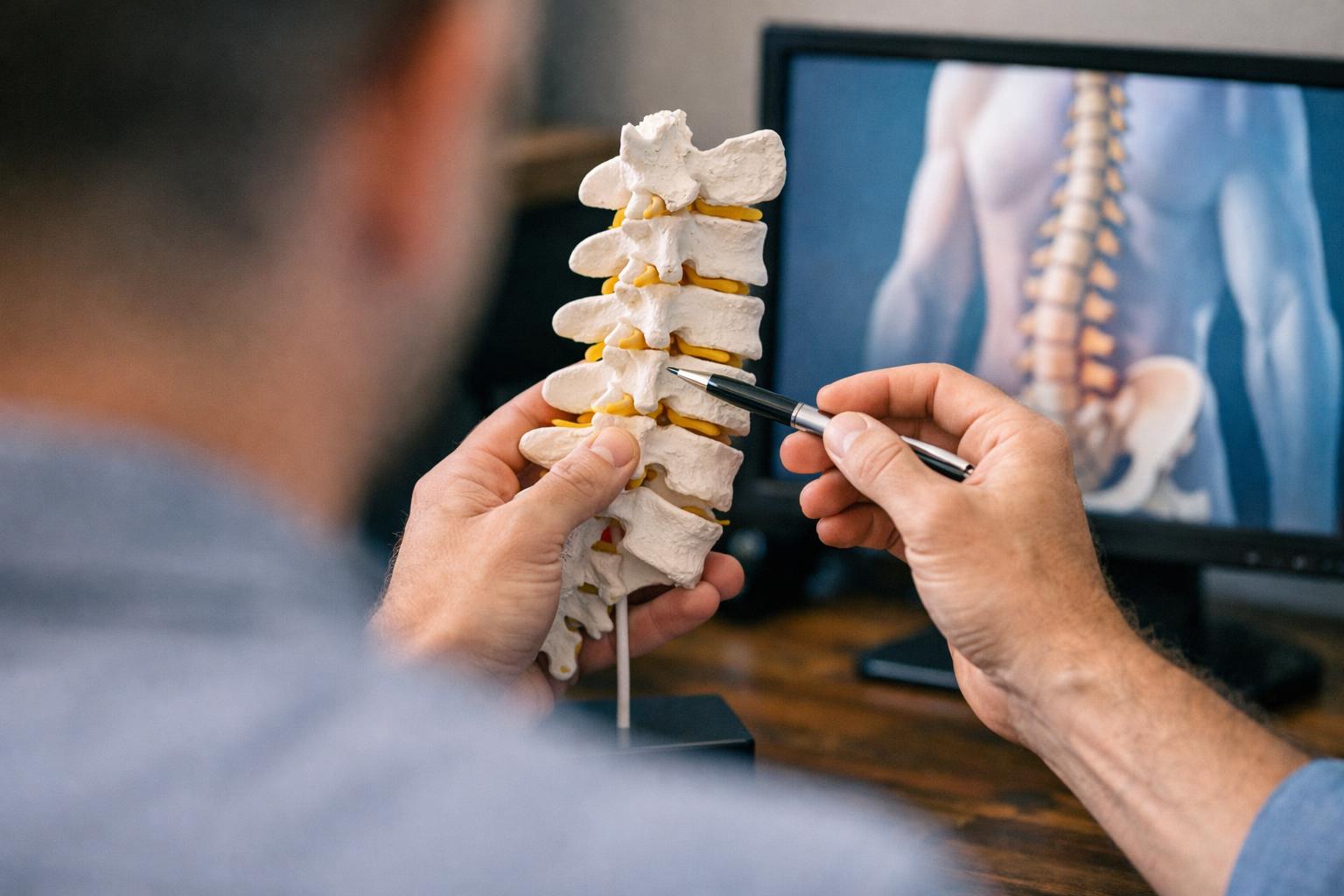
How Lumbar Spine applies to Chiropractor services in Nashville, United States—practical illustration

Your lumbar spine helps with daily tasks. It works when you sit or lift groceries.

It holds most of your body’s weight. So it can wear out over time.

Jobs that are hard on the body cause more wear. So do jobs where you sit too much.

Problems here can cause long-term pain. You might feel numbness or weakness in your legs.

Keeping it healthy helps you move better. It also improves your life.

Bad alignment or weak muscles can cause big problems. These include arthritis or sciatica (leg pain).

Strong core muscles help protect it. Good posture and safe lifting also help.

When the Lumbar Spine Matters Most?

Your lumbar spine works hard when you lift or bend. It also works when you sit too long.

Workers like builders or nurses strain it a lot. They lift heavy things or move often.

Athletes in sports like football also hurt it. Sudden hits or overuse cause problems.

Car crashes or falls can hurt it too. Even bad sleeping positions can cause pain.

Sharp pain or stiffness may mean trouble. So can pain that shoots down your leg.

Chiropractors and therapists help fix it. They work on injuries and long-term pain.

Common Situations Affecting the Lumbar Spine

  • Lifting heavy things the wrong way
  • Sitting too long without good support
  • Car wrecks or sports hits
  • Getting older (wear and tear)
  • Twisting or bending too fast

How to Evaluate Lumbar Spine?

Related Concepts Compared

Lumbar Spine vs. Thoracic Spine

The thoracic spine is the mid-back region with 12 vertebrae attached to the rib cage. While the lumbar spine is the lower back with 5 vertebrae designed for weight-bearing.

Lumbar Spine vs. Sciatica

Sciatica is a symptom of lumbar spine nerve irritation, causing leg pain. While the lumbar spine itself is the anatomical region where the problem originates.

Expert Note

The lumbar spine’s flexibility and load-bearing capacity make it vulnerable to both acute injuries and chronic degeneration. Early intervention with posture correction and targeted exercises can prevent minor issues from becoming debilitating conditions.

Common Mistakes or Myths About Lumbar Spine

  • Assuming all lower back pain comes from muscle strain, ignoring possible disc or nerve issues.
  • Thinking the lumbar spine has the same number of vertebrae as the thoracic spine.
  • Believing that bed rest is the best treatment for lumbar spine injuries, when movement is often more beneficial.
  • Confusing lumbar spine pain with kidney pain, which is located higher and more to the sides.

Lumbar Spine in Practice: A Real-World Example

A warehouse worker lifts a heavy box without bending the knees, straining the lumbar spine. Over time, this leads to disc herniation and sciatic pain down the right leg. A chiropractor helps by adjusting spinal alignment and recommending safe lifting techniques to reduce further injury.

Related Services

Related Terms

Thoracic Spine

Thoracic Spine is the middle section of the human spine, located between the cervical spine (neck) and lumbar spine (lower back). It consists of 12 vertebrae labeled T1 to T12, which connect to the rib cage and protect the chest organs like the heart and lungs. This section supports posture, allows limited movement. And absorbs stress from daily activities.

Disc Herniation

Disc herniation is a spinal condition where the soft, gel-like center of an intervertebral disc pushes through a tear in the disc’s tough outer layer. This can press on nearby nerves, causing pain, numbness. Or weakness in the back, neck, arms. Or legs. Disc herniation often results from aging, injury. Or strain and is most common in the lower back or neck.

Spinal Alignment

Spinal Alignment is the proper positioning of the vertebrae in the spine, ensuring each bone is correctly oriented and spaced to support healthy posture, movement. And nervous system function. Misalignment can cause pain, stiffness. Or nerve irritation. While proper alignment helps the body function efficiently and reduces stress on muscles and joints.

Intervertebral Disc

Intervertebral Disc is a flexible, cushion-like pad located between each bone (vertebra) in the spine. Intervertebral Discs act as shock absorbers, allowing the spine to bend, twist. And support body weight without bones rubbing together. Each disc has a tough outer ring and a soft, gel-like center.

ChiropractorNashville.link

Have Questions About Lumbar Spine?

Contact ChiropractorNashville.link for practical guidance on Lumbar Spine and related chiropractor work in Nashville.

+1 615-777-0624